Infrastructure as a Catalyst for Social Prosperity and Industrial Integration under Vision 2030
Stay informed with the latest news, resources, and insights from Takween Plast.

Kenan Alsoufi
CEO - Partnership
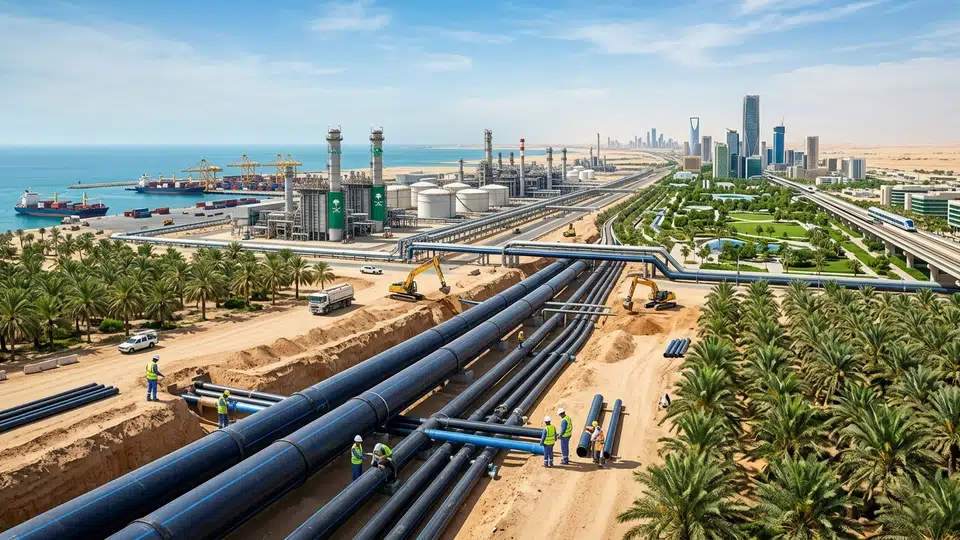
Infrastructure in the Kingdom today is the bridge connecting natural wealth (oil and gas) with sustainable social prosperity. By deepening the integration between the petrochemical sector and downstream industries, the Kingdom is not only reinforcing its position as an energy leader but is also emerging as a global industrial hub that exports both knowledge and finished products, ensuring an independent and prosperous economic future.
Article content
1. Infrastructure and Social Prosperity: Quality of Life and Sustainability
According to Global Sustainability Indicators, the quality of infrastructure is directly correlated with social well-being. Advanced water and sewage networks, smart transportation systems, and fully equipped industrial cities contribute to:
- Reducing Carbon Footprints: By adopting green construction technologies and utilizing eco-friendly materials, such as recyclable HDPE pipes.
- Stimulating Organized Urban Growth: By connecting urban areas with high-efficiency service networks that ensure resource sustainability for future generations.
2. Saudi Vision 2030: Moving from Consumption to Value Addition
Vision 2030 has placed infrastructure at the heart of the "National Industrial Development and Logistics Program" (NIDLP). The goal is not merely to build facilities, but to create an ecosystem that allows the Kingdom to transform into a global industrial power by:
- Developing industrial cities (such as Jubail and Yanbu) into global models of industrial integration.
- Transforming the Kingdom into a logistics hub connecting three continents, requiring unmatched digital and physical infrastructure.
3. Industrial Integration: From Petrochemicals to Downstream Industries
The Kingdom possesses a major competitive advantage as a global leader in the production of petroleum and petrochemical raw materials. The key lies in "Industrial Integration"—maximizing the benefit of raw materials (such as polymers and resins) by converting them into finished products locally:
- Localizing the Plastics Industry: Instead of exporting petrochemical granules, the Kingdom is shifting toward supporting industries that use these materials to produce infrastructure piping, spare parts, and advanced construction materials.
- The Value Chain: This integration reduces import costs, increases local content ratios, and creates specialized technical job opportunities.
4. Economic Sovereignty and Industrial Independence
Strengthening industries based on raw materials extracted from the oil and gas sector grants the Kingdom significant strategic independence:
- Self-Sufficiency: Securing the needs of mega-infrastructure projects (such as NEOM and THE LINE) from national factories using Saudi raw materials.
- Transforming into a Global Exporter: Thanks to the abundance of raw materials and the development of logistical infrastructure, Saudi products (such as advanced piping systems and downstream products) are becoming the most competitive in international markets in terms of both quality and cost.