


Technical Evaluation of Plastic Pipe Systems for Modern Infrastructure Projects
Stay informed with the latest news, resources, and insights from Takween Plast.
Takween Team
Editorial Staff
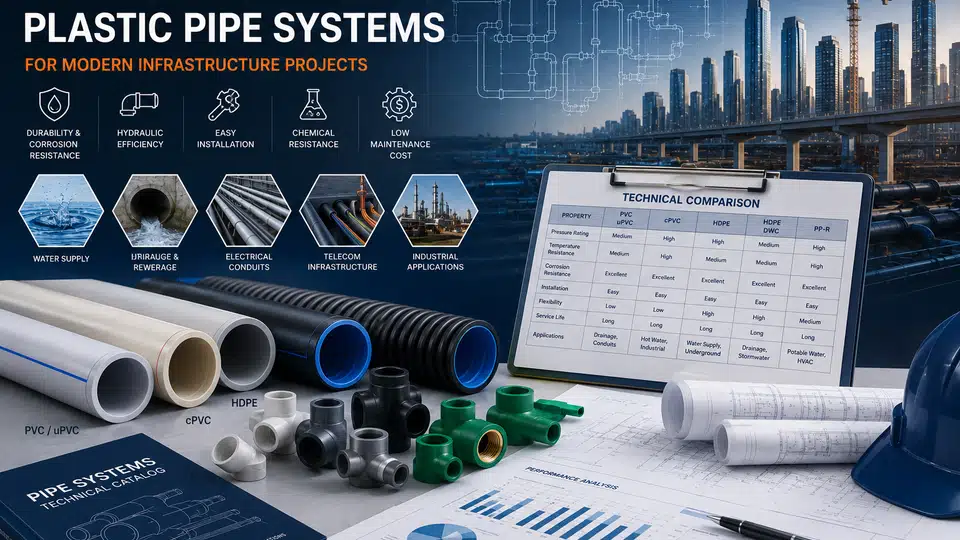
Plastic pipe systems have become essential in modern infrastructure due to their durability, corrosion resistance, hydraulic efficiency, installation flexibility, and suitability for different engineering applications. This paper reviews the main categories of plastic pipes and fittings used in construction and infrastructure projects, including PVC, uPVC, cPVC, HDPE, HDPE DWC, PP-R, and optical duct systems.
Article content
1. Introduction
Infrastructure projects require pipe systems that can withstand pressure, temperature variation, soil movement, chemical exposure, and long service conditions. Traditional materials may suffer from corrosion, scaling, heavy weight, and high installation cost. Plastic pipe systems offer practical advantages for water supply, drainage, electrical protection, telecom ducts, and industrial networks.
2. Main Plastic Pipe Materials
PVC and uPVC are commonly used in drainage, pressure systems, and electrical conduit applications. cPVC provides improved temperature resistance for hot water and specialized applications. HDPE is used in pressure pipelines, underground utilities, and flexible infrastructure systems. HDPE double wall corrugated pipes are used for drainage and stormwater networks due to their ring stiffness and lightweight structure. PP-R systems are used for potable water and hot/cold water installations.
3. Performance Factors
The selection of a pipe system depends on several technical factors: pressure rating, wall thickness, diameter, jointing method, chemical resistance, temperature range, installation environment, and compliance with project specifications. Proper product selection reduces leakage risk, improves service life, and lowers maintenance requirements.
4. Applications
Plastic pipe systems are used in residential buildings, commercial towers, industrial facilities, road infrastructure, water networks, sewage systems, electrical networks, and telecom projects. Each application requires a specific material and fitting system to ensure performance and safety.
5. Importance of Standards
Compliance with recognized standards helps ensure consistent quality, reliable dimensions, pressure performance, material safety, and long-term durability. Engineers and consultants depend on technical catalogs and product data sheets to verify that the selected products match project requirements.
6. Conclusion
Plastic pipe systems provide an efficient and durable solution for modern infrastructure. A complete technical catalog library improves product selection, supports engineering decisions, and helps contractors and consultants reduce project risk. Takween Plast contributes to this process by offering specialized catalogs for multiple pipe and fitting systems used across construction and infrastructure sectors.
Related Posts
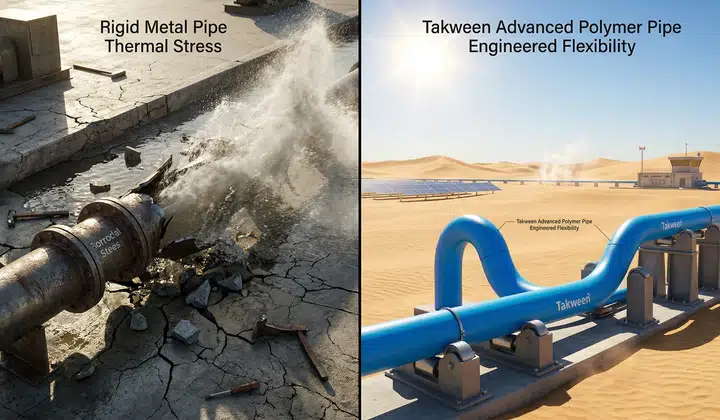
Extreme Thermal Stress in the Gulf
Is Our Infrastructure Melting from the Inside? (Pipe Thermodynamics and the Risks of Silent Collapse) Executive Summary Infrastructure in the Arabian Gulf is subjected to one of the harshest thermal environments on Earth. The issue extends far beyond ambient air temperature; it encompasses direct solar radiation and summer soil temperatures that frequently exceed 60°C. This research investigates the phenomenon of "thermal stress, expansion, and contraction" within piping networks, highlighting fatal structural errors that occur when engineers neglect expansion joints. Furthermore, the paper explores how advanced polymer engineering at "Takween Plast" provides solutions grounded in "structural flexibility" to safely absorb these stresses, ensuring the long-term sustainability of networks and preventing catastrophic bursts.
Read more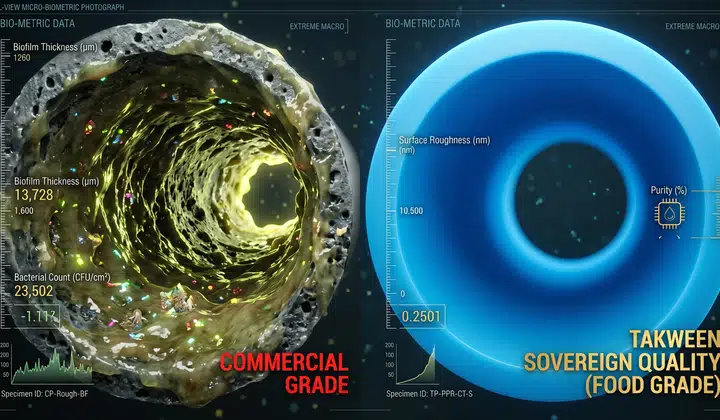
"Biofilm" – The Hidden Killer in Water Networks
The Interplay Between Hydraulic Design, Material Properties, and Drinking Water Quality in Hot Climates Executive Summary Maintaining drinking water quality from the moment it leaves treatment or desalination plants until it reaches the consumer's tap is a complex engineering challenge. In the Gulf region, where temperatures rise exceptionally, this challenge morphs into a silent crisis known as "Biofilm." This in-depth report investigates the biomechanics and hydraulics of biofilm formation, highlighting common engineering flaws in pipe material selection and the neglect of the "friction coefficient." Furthermore, it showcases the radical solutions provided by advanced polymer technologies, specifically "Takween Plast" products, to ensure the sustainability and safety of water networks.
Read more